
Have The Jaguars Finally Emerged From The Void?
At a moment when everything feels hopeless, the NFL's most invisible franchise has become an unlikely reason to believe in something.

This is Throwbacks, a newsletter by me, Michael Weinreb, about sports, history, culture, and politics—and how they all bleed together.
If you like what you read, please click the button below, join the mailing list for FREE and please share, on social media or through e-mail or however you feel comfortable sharing.
And if you’ve been reading for a while, please consider joining the list of paid subscribers to unlock paid posts and allow me to expand Throwbacks’ offerings.
Here’s a link to get 20 percent off a monthly membership for your first year:
And here’s link to get 25 percent off an annual membership:
(If you cannot afford a paid subscription and would like one, send me an email and I’ll comp you one, no questions asked.)
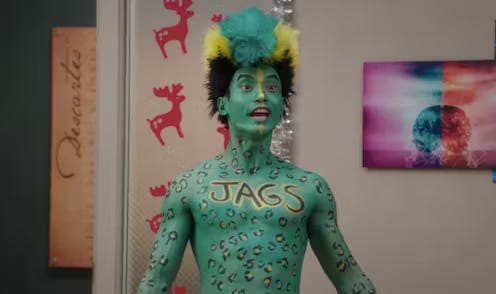
I.
Look, everything is terrible right now. You don’t need me to tell you that. You probably spent at least some of your time the past couple of days watching videos of an American mother getting shot to death by masked soldiers for no apparent reason, while the people in charge issued Orwellian responses to what unfolded before our eyes and ears. There’s nothing I can really say that will add much to the conversation.

Which is why I want to talk, instead, about the Jacksonville Jaguars.
But how about we take a breath first, because that is one hell of a transition.
II.
The Jacksonville Jaguars have existed for three decades now, which is a remarkable thing to ponder given that their history is largely an undefinable void. There are young adults who have been fans of this team for their entire life—although I’m honestly not sure if I’ve ever actually met one in person—and if you ask them to name the franchise’s defining moment, I’m honestly not certain what they would say.
The Jaguars’ all-time leaders in passing and rushing and receiving are Mark Brunell and Fred Taylor and Jimmy Smith, solid players with anodyne names, none of whom are sure things to make the Pro Football Hall of Fame. (The only Jaguar to make the Hall of Fame as I write this is an offensive lineman named Tony Boselli.) The Jaguars’ winningest coach was their first coach, Tom Coughlin, who got fired nearly 25 years ago. The Jags’ uniforms are gaudy and weird and include a logo of an animal that has not existed in the state of Florida for at least a century. Their most famous fan is a fictional character, Jason Mendoza from showrunner Michael Schur’s excellent sitcom The Good Place. Mendoza is a genial idiot, amateur D.J., and professional criminal who is obsessed with former Jaguars quarterback Blake Bortles, because there is not a single scenario in which the name Blake Bortles doesn’t make people laugh. Mendoza would come to define a fan base and a franchise that feels so enigmatic that it almost makes you question whether they actually exist at all.
The Jaguars were born in the summer of 1995, on a football field in Canton, Ohio. One of their most renowned fans at the time was a 53-year-old British woman named Sara Nichols, who founded the team’s booster club. At that moment, there was hope that the Jaguars could boost Jacksonville’s place in the world—that a town best known for being the home of the greatest Southern rock band in history and the world’s largest outdoor cocktail party could become known as a big-league city.1 “I’m a little old for this,” Nichols said at the time, “but I feel if we don’t support the team—well, look what’s happened in Tampa.”
In those early years, it appeared as if the Jaguars might somehow defy the same malaise that had plagued the Bucs and their creamsicle uniforms since the mid-1970s; it looked as if the Jags would be a contender rather than a running punchline. The Jaguars made the playoffs every year between 1996 and 1999, and twice made the AFC Championship game, only to lose to the Patriots and the Titans. But then in 2000, the Jaguars went 7-9, and two years later, they fired Coughlin, who would go on to win two Super Bowls as head coach of the New York Giants.
There were some solid seasons in the decade to come—12 wins in 2005 and 11 in 2007—but even then, it began to feel as if the Jaguars were sinking into an odd purgatorial state. In 2009, in the wake of the Great Recession, seven of the Jaguars’ eight home games were blacked out on local television when fans stopped showing up. For years, the Jaguars have appeared to be on the verge of leaving for some other, more dynamic city that isn’t referred to colloquially as “Rat Town”; it has also long been rumored that the Jaguars might decamp to London and become the NFL’s first international franchise.
Between 2009 and 2019, the Jaguars had one winning season. They fired Jack Del Rio and the original owner, Wayne Weaver, sold the team to Illinois businessman Shad Khan. They hired a coach whose last name was actually Mularkey, and then fired him after one season. They hired a guy named Gus Bradley, who won 14 games over the course of four seasons before getting fired. They hired a guy named Doug Marrone, who got them to the conference championship game in 2017, where they once again lost to the Patriots—and when they went 1-15 in 2020, Marrone got canned. Then they came up with the brilliant idea of hiring Urban Meyer, which…yeah. Doug Pederson went 9-8 his first two seasons, and then, in 2024, with hope percolating…he went 4-13 and got himself canned.
“I’m a 30-year-old fan who’s been around since the ‘90s,” wrote one fan on the team’s Reddit page last season, in a post titled A Plea for Change: Why Is It So Hard to Be a Jags Fan?. “I don’t want to stop watching them and if I’m being totally honest, I don’t even want to want to stop. I just wish they’d be better. Heck, even just average….Anyone else feeling this way?”
“I hate this team and everything about it,” one person responded. “But I’ll wake up and throw my stupid Jags hat on and continue to watch every play for every season I’m alive.”
III.
It is the contention of this newsletter (and of the Buddha) that suffering is an essential element of life, and therefore is an essential element of fandom, and that children who have grown up as sports fans in Boston or Los Angeles in the 21st century are largely missing the point. Sara Nichols, the British woman who founded the Jaguars' booster club, died in 2008. Even the most devoted believers fade away. And so when the good times are few and far between—when you find yourself questioning why you’re doing what you’re doing—you relish the moments when hope actually peeks through the blinds and reminds you why you’re alive.
Jason Mendoza’s Jaguars fandom is an essential element of The Good Place’s charm because it is a show about what it means to actually grow and change and try to be a better person amid all the hardships of existence (and the afterlife). So much of life can feel futile, and that is what the Jaguars have come to represent: Amid the almost oppressive popularity of professional football in America, the Jaguars are trapped in a strange void. Everything about them urges you to ask why anyone would even bother to care. But that’s led us here, to the first season under a coach named Liam Coen, in which the Jaguars have won 13 games and feel like a real, actual Super Bowl contender, with a franchise quarterback, Trevor Lawrence, who appears to have finally found himself. The Jaguars Reddit page is stacked with hype videos instead of sad missives. The hope is palpable.
On Sunday, the Jaguars will host the Buffalo Bills in a home playoff game. The Bills, of course, represent a different kind of sadness; the Bills are the franchise that lost four straight Super Bowls, which is in itself a memorable chapter in NFL history. Every other ignominious franchise—the Browns, the Cardinals, the Lions—has those moments, those things they are remembered for, even if they ended poorly; as of now, the Jaguars don’t even have anything like that at all. (Ask a non-Jaguars fan to recall any of their three conference championship losses, and I’m not sure if they could.)
But maybe that’s about to change. Maybe this is the year the Jaguars alter the entire paradigm of the franchise. Maybe, at a moment when the country is shrouded in fear and anger and cynicism, the Jaguars will prove that nothing lasts forever, even the dark phases of history. Maybe the Jaguars will emerge from the void to remind us that being alive and having something to believe in is a gift in itself.
Here is where I will make a strange confession: I am almost positive that I covered a game in Jacksonville in my early years as a reporter, but if I did, I cannot remember anything about the city. Which may be more of a strike against my own hippocampus rather than any kind of strike against the city of Jacksonville.
This newsletter is a perpetual work in progress. Thoughts? Ideas for future editions? Respond to this newsletter, Contact me via twitter or at michaeliweinreb at gmail, or leave a comment below. If you enjoyed this newsletter, please join the list and/or share it with others.
It's insulting to actual soldiers to mislabel ICE agents as such.
Kevin Hardy, a linebacker who is the second-most-famous football player from my hometown of Evansville, Indiana, (after quarterback Bob Griese) and most famous football player from my high school, played for the Jaguars. Just saying.